
March 25, 2025
Fire doors are a vital part of any building’s fire safety strategy. They’re not just another regulatory requirement—they’re life-saving systems designed to protect occupants, preserve escape routes, and slow the spread of fire and smoke. Yet far too often, they’re treated as a “fit-and-forget” feature.
At LFS, we recently supported a facilities team responsible for a mixed-use commercial building who were shocked to learn that their fire doors—installed just 18 months earlier—were already falling short of compliance standards.
The Danger of “Installed = Compliant”
The assumption that new fire doors are automatically compliant is one of the most common—and dangerous—misconceptions we encounter. Fire doors, like any safety-critical equipment, must be inspected and maintained regularly. Without this ongoing diligence, even a perfectly installed door can become a weak link in your fire strategy.
In this case, the property manager believed their doors met all requirements because they were part of the original build. But when we carried out our assessment, several red flags quickly emerged, from missing documentation to clear signs of wear and installation issues.
Our Process: From Assumptions to Assurance
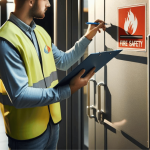
To provide full clarity and peace of mind, we conducted a complete fire door compliance review, which included:
✔ Reviewing available documentation – We began by requesting all available fire door certificates, test evidence, and compartmentation drawings.
✔ On-site inspection of each door set – Our qualified inspectors examined the doors’ condition, installation, and suitability for their location.
✔ Detailed reporting and recommendations – We produced a comprehensive report outlining non-conformances, prioritised risks, and practical steps for remediation.
What We Found: Gaps—Literal and Figurative

While some of the doors were technically fire-rated, they had been installed incorrectly or had deteriorated due to lack of maintenance.
Key issues included:
❌ Improper installation – Several doors had excessive gaps beyond permitted tolerances, making them ineffective in containing smoke.
❌ Inadequate fire ratings – A number of doors expected to be FD60 were actually FD30, posing a serious risk in high-rise areas.
❌ Missing or damaged seals – Intumescent strips and cold smoke seals were absent or failing in several cases.
Each of these defects could have compromised evacuation routes or allowed fire to spread more rapidly—potentially resulting in catastrophic outcomes.
Taking Action: Practical, Cost-Conscious Compliance
Once we’d outlined the compliance gaps, we worked closely with the client to put things right—without overextending their budget. This included:
✅ Replacing non-compliant doors with properly rated alternatives
✅ Correcting installation errors using approved materials and methods
✅ Providing a full audit trail to support future inspections and regulatory checks
Don’t Leave Fire Safety to Chance
If you’re a property or facilities manager, ask yourself:
When were your fire doors last professionally inspected?
Do you have up-to-date documentation proving compliance?
Are you confident your fire doors are doing the job they were designed for?
If there’s any uncertainty, now is the time to act. A proactive fire door inspection could not only keep your building compliant—it could save lives.
Book your fire door compliance check with LFS today.
Let’s make sure your fire doors are doing what they’re meant to do—protecting people when it matters most.
Why Choose Us?
At LFS, we are proud to be BM TRADA accredited, giving our clients the assurance that all inspections, installations, and maintenance services are carried out to recognised third-party certified standards. You can trust us to deliver reliable, traceable, and fully compliant fire door solutions.


